When tigers still smoked pipes …
Many Korean fairy tales don't simply start with "Once upon a time." They begin in a time when tigers still smoked pipes. In Korean it says: *horangi dambae piudeon sijeol* – 호랑이...

When tigers still smoked pipes …
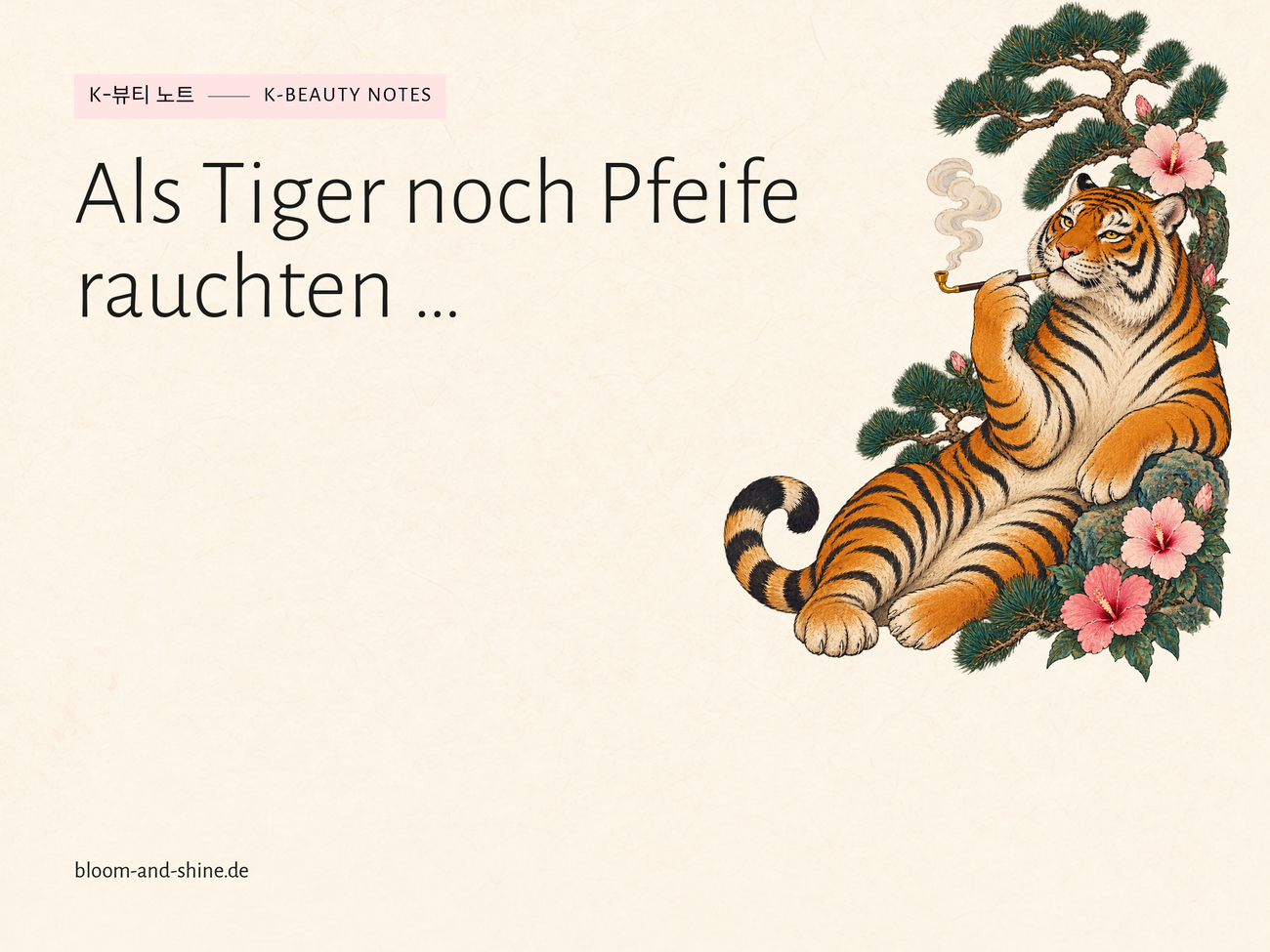
Many Korean fairy tales don’t simply start with “Once upon a time”. They begin in a time when tigers still smoked pipes . In Korean it says: *horangi dambae piudeon sijeol* – 호랑이 담배 피우던 시절. A story that takes place in a long-faded past when things were still magical.
A tiger with multiple faces
The tiger is rarely just dangerous in Korean stories. Sometimes he guards a place. Sometimes it represents strength and dignity. And sometimes he allows himself to be thoroughly fooled by a smaller, smarter animal.
This is why he appears surprisingly human, especially in popular images. He looks stern, a little offended or so self-satisfied that you already think he’ll do the next stupid thing.
That’s what makes it interesting. A symbol does not always have to be ceremoniously placed on a pedestal. It can show its teeth and still have a sense of humor.
Pines remain when seasons pass. That shows consistency.
A pine tree often appears next to the tiger. Their needles stay green even in winter. In Korean images it can therefore represent long life, stability and an upright posture.
A well-known story is about the old pine tree Jeongipumsong. It is said to have raised its branches so that King Sejo’s palanquin could pass underneath. The tree was later even given a rank – a nice story about respect, even if legends rarely grow as neatly as file notes.
Hibiscus – a flower that comes back
The Mugunghwa, Hibiscus syriacus, is the national flower of South Korea. Your name is associated with something eternal or recurring. Individual flowers don’t last forever. However, the plant continues to produce new ones over many weeks.
Maybe that’s why Tiger, Jaws and Mugunghwa go so well together. None of these images simply say “Korea.” They talk about courage, endurance, protection – and how strength doesn’t always have to look serious.
Meaning changes with time, image and story. Sometimes a tiger is a guardian. Sometimes a fool. And sometimes he just sits in a world long gone and smokes his pipe.